Protests and public demonstrations have rippled around the world following the largest U.S. and Israeli attacks on Iran in decades, data from the Armed Conflict Location & Event Data Project (ACLED) shows.
ACLED’s data covers demonstrations between February 28 and March 6 and records more than 990 worldwide, both for and against Iran’s government and for and against the U.S. and Israeli bombing campaign against Tehran.
The largest number of demonstrations were recorded in the Middle East, where of 325 total protests, 35 were classified as violent demonstrations.
At least 23 protesters were killed in clashes in Pakistan on March 1, including 10 in the port of Karachi where security guards at the U.S. consulate fired on demonstrators who breached the outer wall, 11 in the northern city of Skardu where the crowd torched a U.N. office, and two in Islamabad.
In Iraq, police fired tear gas and stun grenades to scatter hundreds of pro-Iranian protesters who had gathered outside the Green Zone diplomatic compound in the capital Baghdad, where the U.S. embassy is located.
In European countries with large populations of Iranian exiles, many came out to celebrate in the days after the U.S. and Israeli campaign began.
In Paris, a joyous crowd of thousands turned out to celebrate, waving flags of Iran’s pre-revolutionary monarchy, some carrying red roses and bottles of champagne. Some held aloft portraits of loved ones killed under decades of Iran’s clerical rule. Others waved flags of Israel, the United States and France.
In Lisbon, exiled Iranians gathered outside the Iranian embassy.
In Britain, police said they had banned a pro-Iranian march due to take place in London on Sunday, citing the possibility of “extreme tensions” with counter-protesters and the risk posed by Tehran during the conflict in the Middle East.
The threshold to ban a protest is high in Britain, with the police saying this was the first time the power had been invoked in 14 years, but the risks of public disorder were “so severe” it was right to block it. The ban also applies to any counter-protest marches.
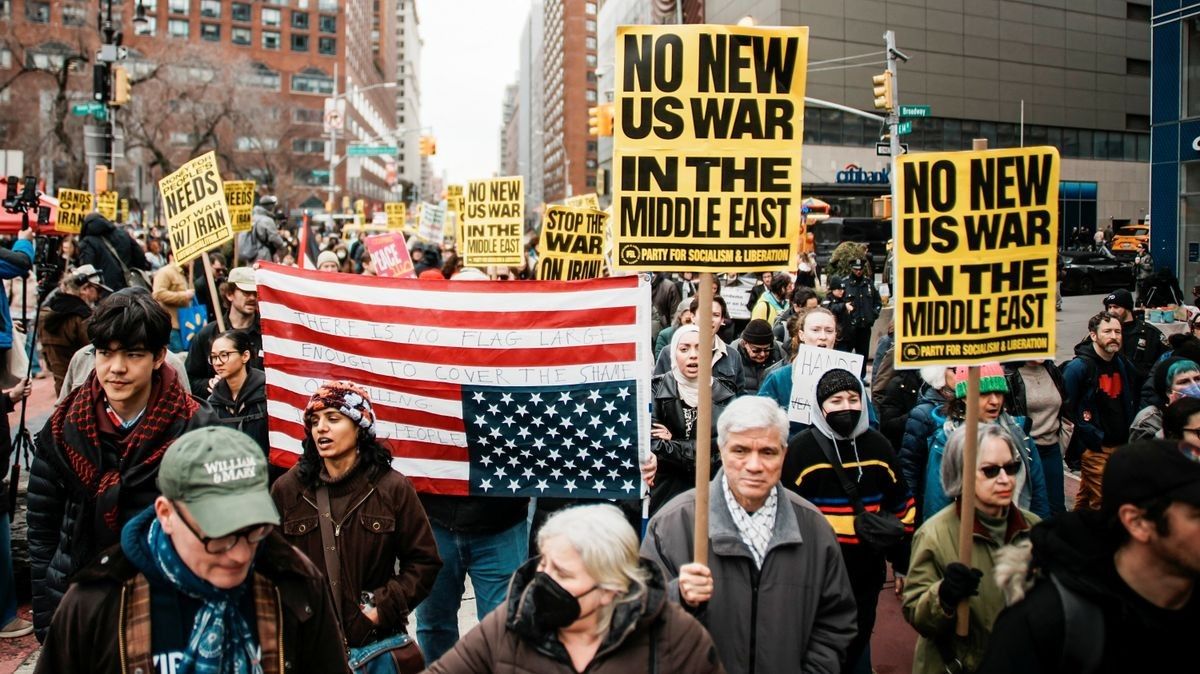
In the United States, there have been 145 demonstrations in cities across the country including Los Angeles, New York, Washington D.C., Dallas, Philadelphia and Las Vegas.
The majority have been protests against the Trump administration’s U.S.-led campaign, according to the data.
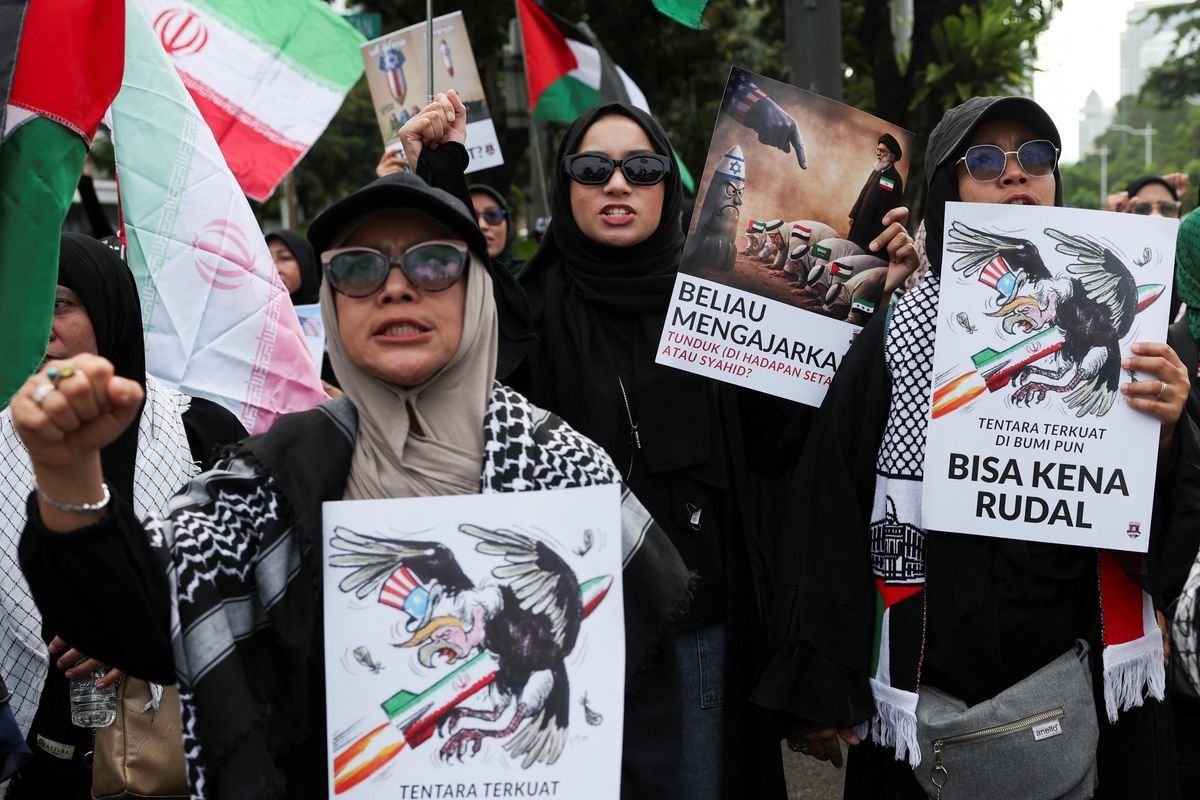
Women carry placards during a protest outside the U.S. embassy in Jakarta, Indonesia, March 9, 2026. REUTERS/Ajeng Dinar Ulfiana
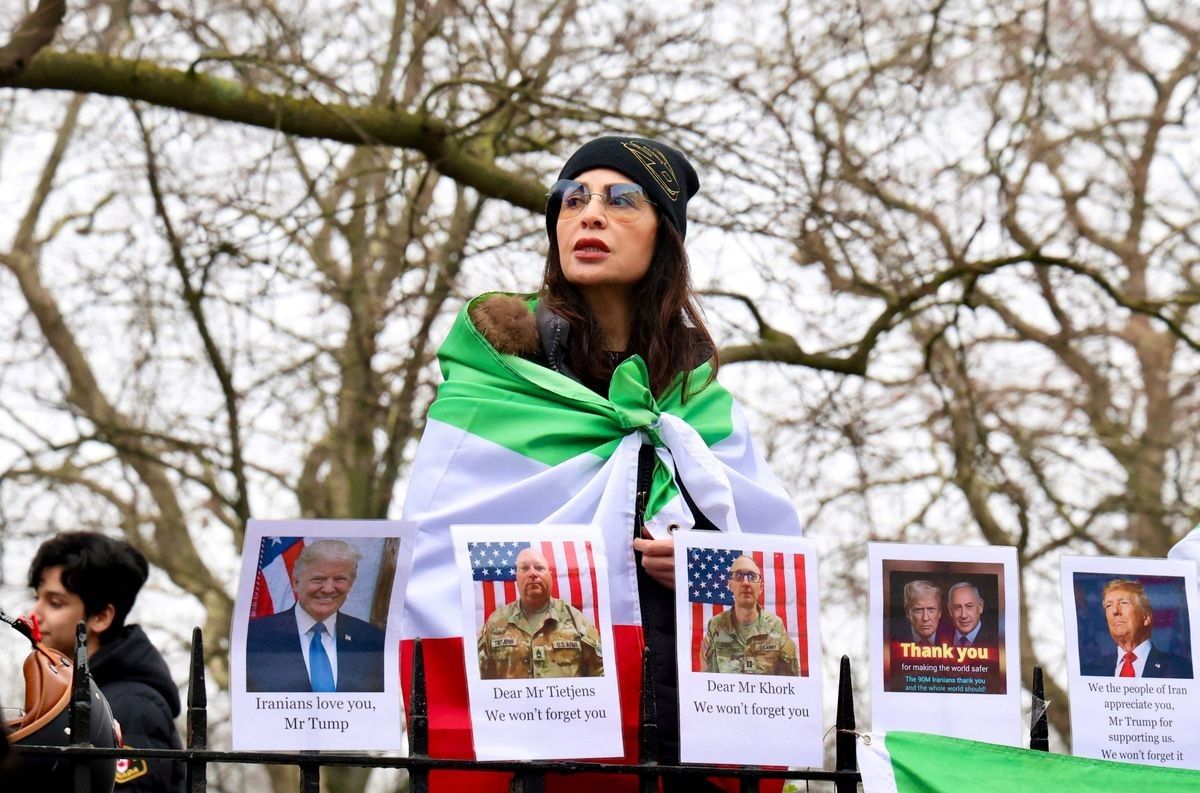
A demonstrator attends a protest against the Iranian government held by supporters of the Iranian royal family in exile, who marched through central London past the Iranian embassy to the Israeli embassy, in London, Britain, March 8, 2026. REUTERS/Yann Tessier
People march during a protest against U.S. and Israel strikes against Iran in New York City, U.S., March 7, 2026. REUTERS/Eduardo Munoz
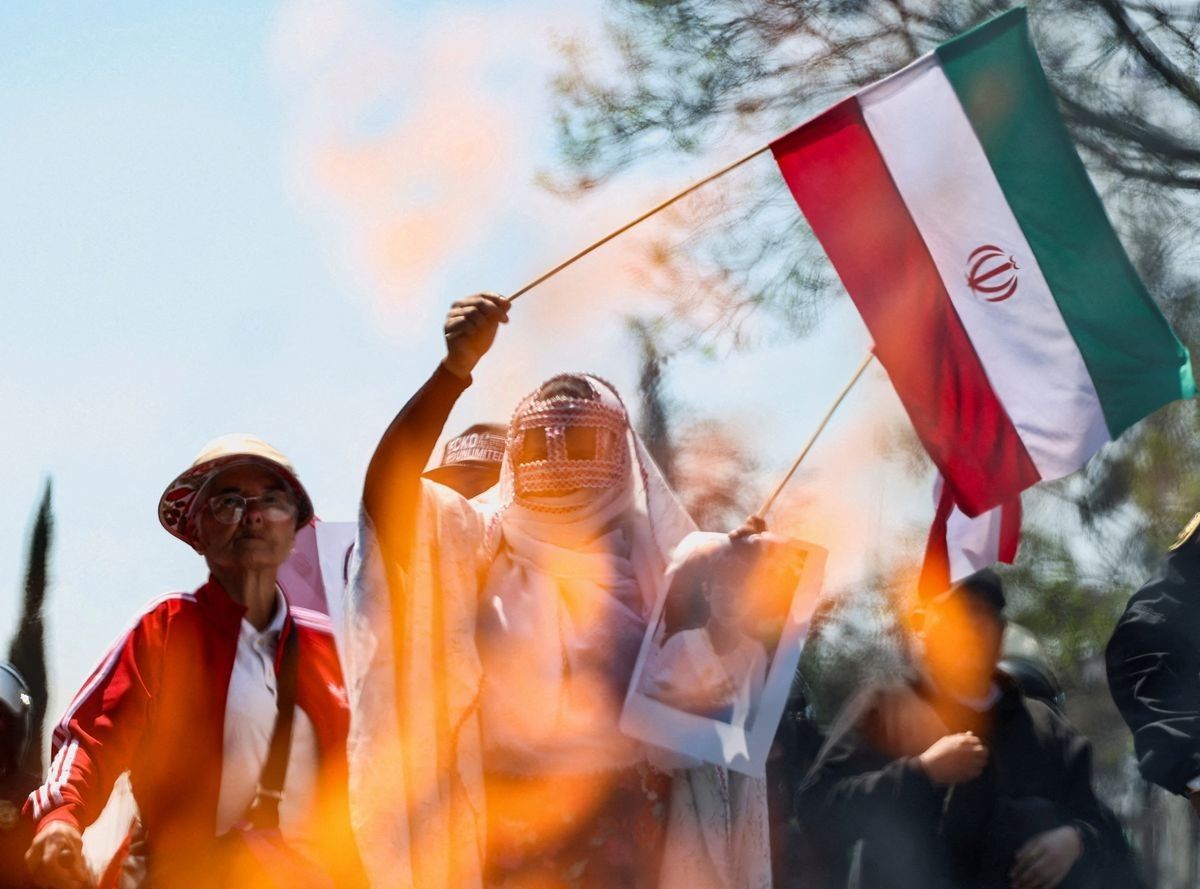
A demonstrator holds an Iranian flag while others burn an effigy during a protest outside the U.S. Embassy following the killing of Iran’s Supreme Leader Ayatollah Ali Khamenei in U.S. and Israeli strikes, in Mexico City, Mexico, March 7, 2026. REUTERS/Luis Cortes