The pause in hostilities between Israel and Hamas — extended another two days on Monday — has given Gazans brief reprieve from seven weeks of near continuous Israeli bombardment across the Gaza Strip. More than 1.8 million people have been displaced from their homes since Israel’s campaign began in retaliation for Hamas’ Oct. 7 attack in southern Israel, according to the United Nations Office for the Coordination of Humanitarian Affairs (OCHA).
The bombardment has flattened swathes of northern Gaza and reduced entire neighbourhoods to rubble. Two-thirds of the enclave's population of 2.3 million have been displaced to the south.
According to Gaza’s Health Ministry, more than 14,000 Gazans — roughly 40% of them under 18 — have been killed in Israel’s military operation.
Internally displaced people at U.N. and government shelters
A map shows the number of internally displaced people in each of the 5 governorates in Gaza. The largest numbers are in governorates in the south, but data in the north has been incomplete since Israel’s military ordered residents to leave.
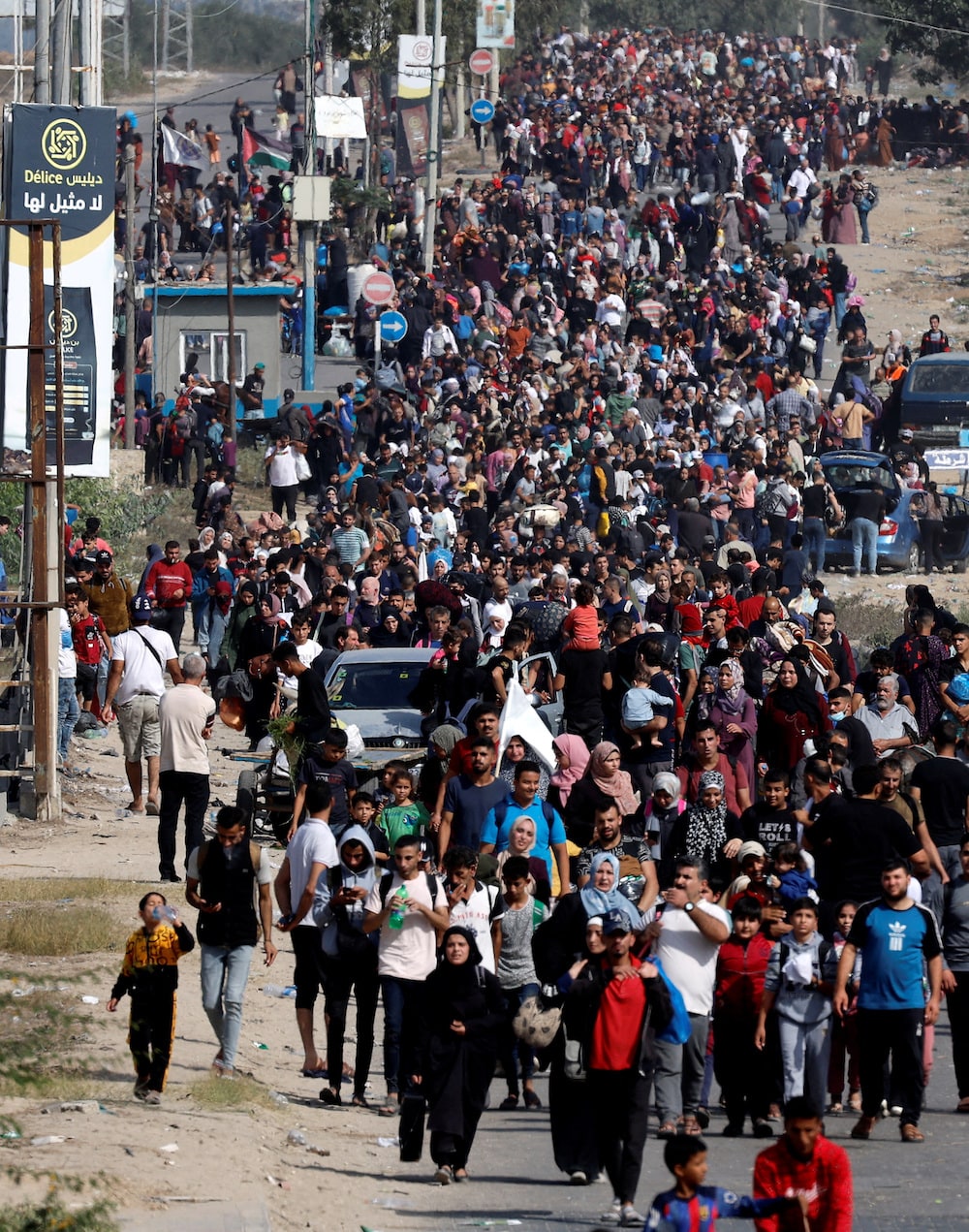
Palestinians fleeing northern Gaza walk towards the south, amid the ongoing conflict between Israel and Palestinian Islamist group Hamas, in the central Gaza Strip, Nov. 9, 2023. REUTERS/Mohammed Salem
After encircling northern Gaza with ground forces, the Israeli air force dropped leaflets in eastern areas of Khan Younis in the south of the Gaza Strip telling people to evacuate to shelters for their own safety.
While the truce for exchanges of hostages and prisoners between Israel and Hamas still holds, a resumption of hostilities and an expected Israeli offensive in the south could compel hundreds of thousands who fled Gaza City to uproot yet again, along with residents of Khan Younis, a city of more than 400,000, compounding an already dire humanitarian crisis.
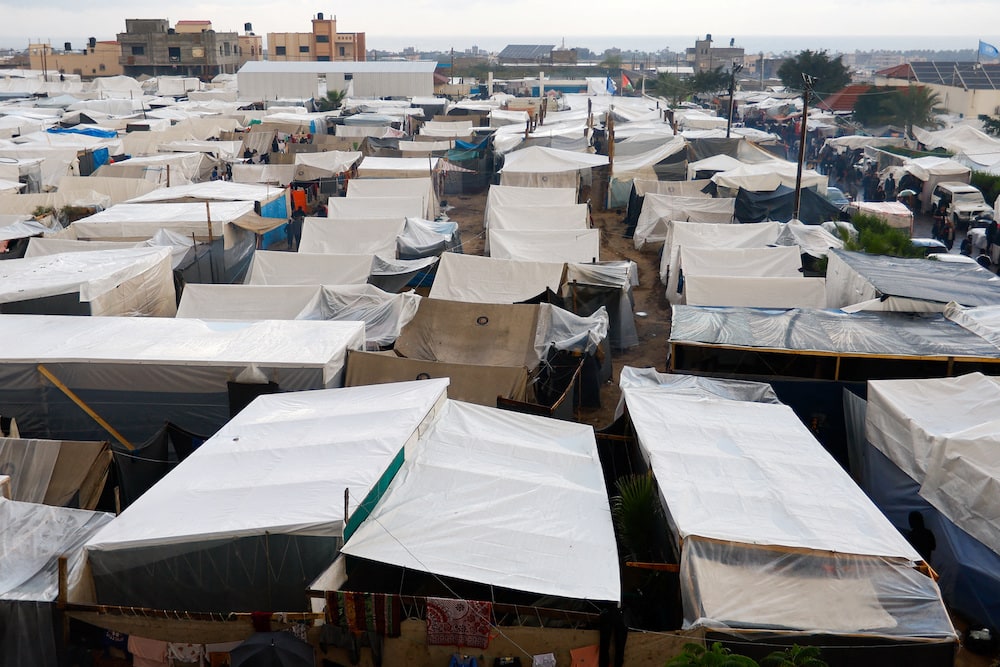
Khan Younis is located in the southern half of the Gaza Strip. Tens of thousands of people displaced from the north have already sought refuge there in schools and tents, causing severe overcrowding amid shortages of food and water.
A map shows UNRWA schools and hospitals and clinics in and around the Khan Younis camp.
The Nasser Hospital area in Khan Younis camp has become a focal point, housing numerous schools and facilities administered by the United Nations Palestinian Refugee Agency (UNRWA).
Initially designed for educational purposes, these establishments have been repurposed as shelters since the war began.
The surge in displaced people seeking safety has led to overcrowding in these facilities. Those newly displaced from the northern regions and other areas affected by the conflict are finding refuge in makeshift tent camps positioned around the hospitals and schools.
A satellite image shows several U.N.-run schools and places where people are seeking shelter in the streets around Nasser Hospital in Khan Younis.
U.N. shelters are accommodating far more people than their intended capacity and are unable to accommodate new arrivals. Overcrowding is contributing to the spread of diseases, including acute respiratory illness and diarrhoea, prompting environmental and health concerns.
On average, 160 people sheltering in UNRWA schools share a single toilet. In the Rafah logistics base, where more than 8,000 people have sought shelter, 400 people are sharing one toilet.
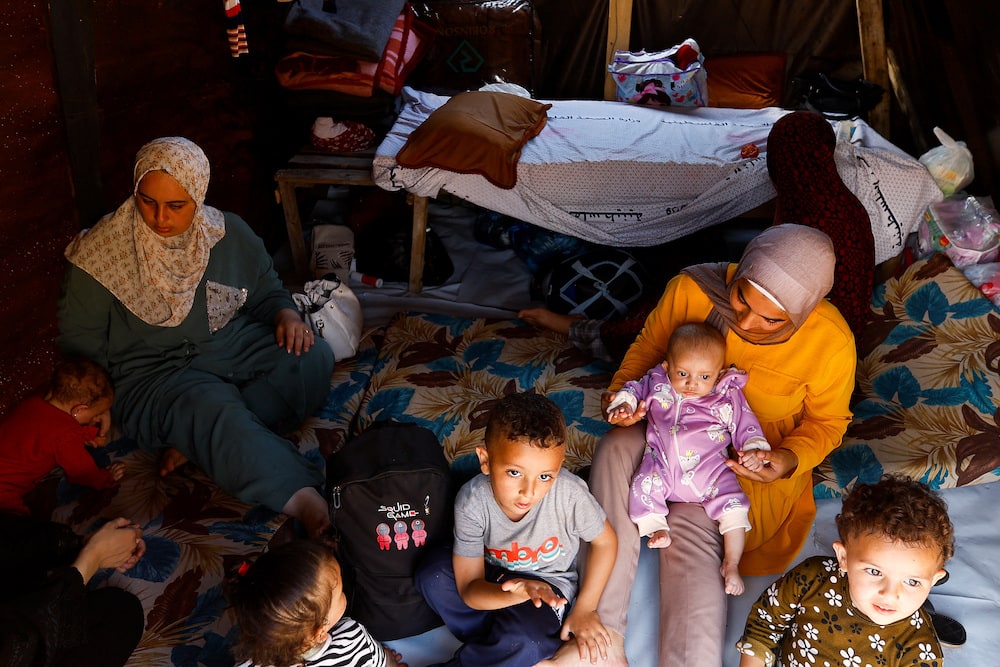
Women sit with children as displaced Palestinians, who fled their homes due to Israeli strikes, take shelter at Nasser hospital, in Khan Younis in the southern Gaza Strip Nov. 18, 2023. REUTERS/Ibraheem Abu Mustafa
Displaced Palestinians shelter in a tent camp, amid the conflict between Israel and Palestinian Islamist group Hamas, in Khan Younis in the southern Gaza Strip, Nov. 15, 2023. REUTERS/Ibraheem Abu Mustafa
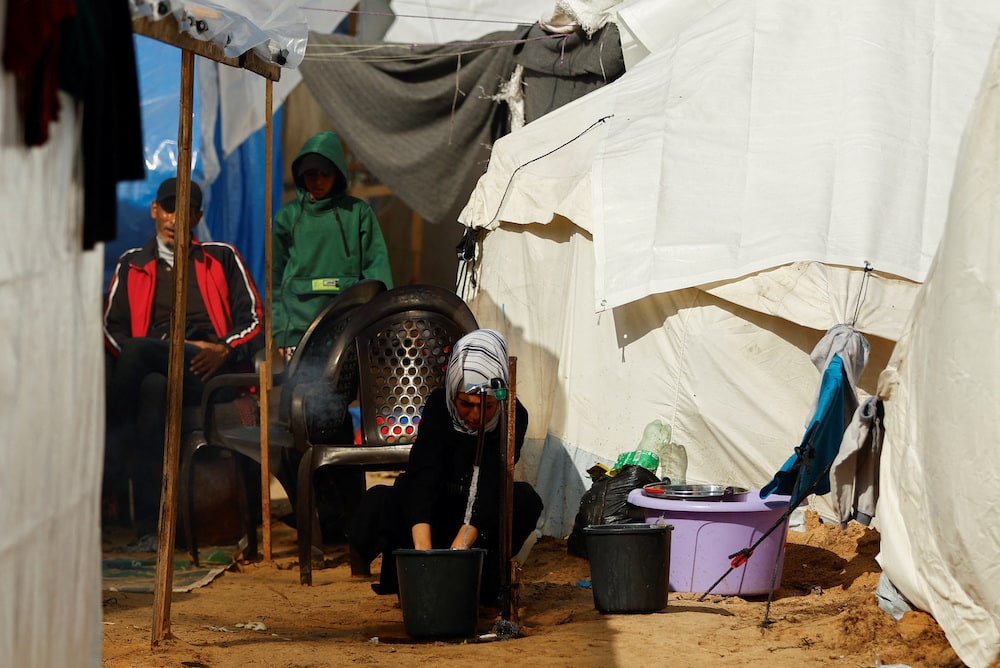
Displaced Palestinians take shelter, amid the ongoing conflict between Israel and Palestinian Islamist group Hamas, in a tent camp in Khan Younis in the southern Gaza Strip, Nov. 20, 2023. REUTERS/Ibraheem Abu Mustafa
A map shows UNRWA schools and hospitals and clinics in and around the refugee camp in Rafah.
Shortages of food, fuel, drinking water and medicines have worsened in recent weeks as Israel allowed only some trucks of humanitarian supplies to cross into Gaza from Egypt.
Since the truce, some fuel has been distributed in the south to support food distribution and to restart generators at hospitals, water and sanitation facilities and shelters.
Two pipelines coming from Israel have been piping potable water into southern Gaza, according to the OCHA, but in the north, the main water desalination plant and Israeli pipelines have been out of service. Access to supply water to people in the north has been restricted for weeks. The risk of dehydration and of waterborne diseases from drinking unsafe water continues.
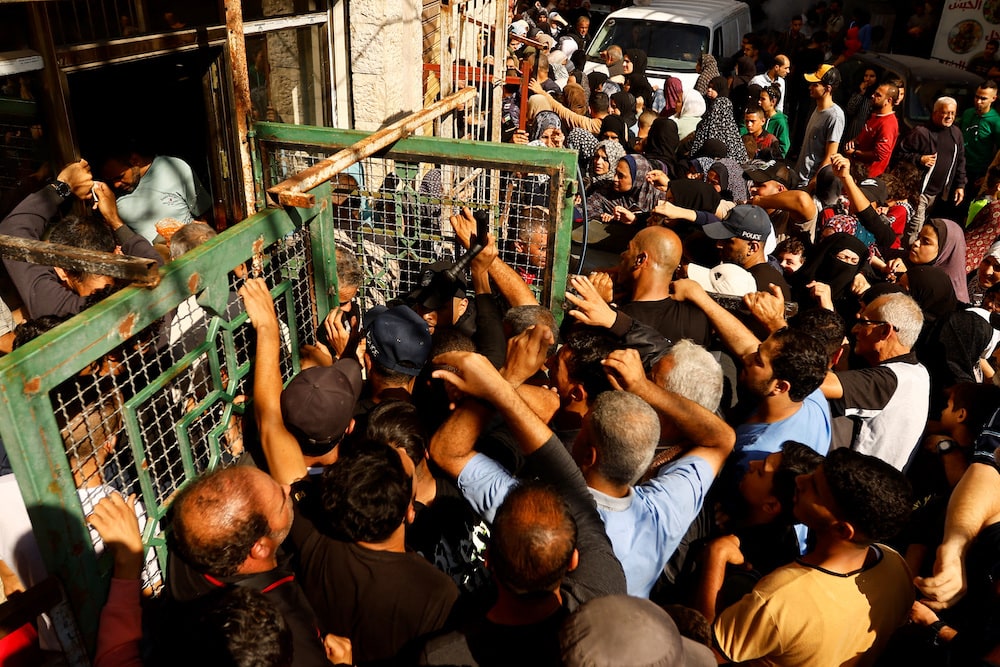
Palestinians queue as they wait to buy bread from a bakery, amid shortages of food supplies and fuel as the conflict between Israel and Palestinian Islamist group Hamas continues, in Khan Younis in the southern Gaza Strip, Nov. 17, 2023. REUTERS/Ibraheem Abu Mustafa
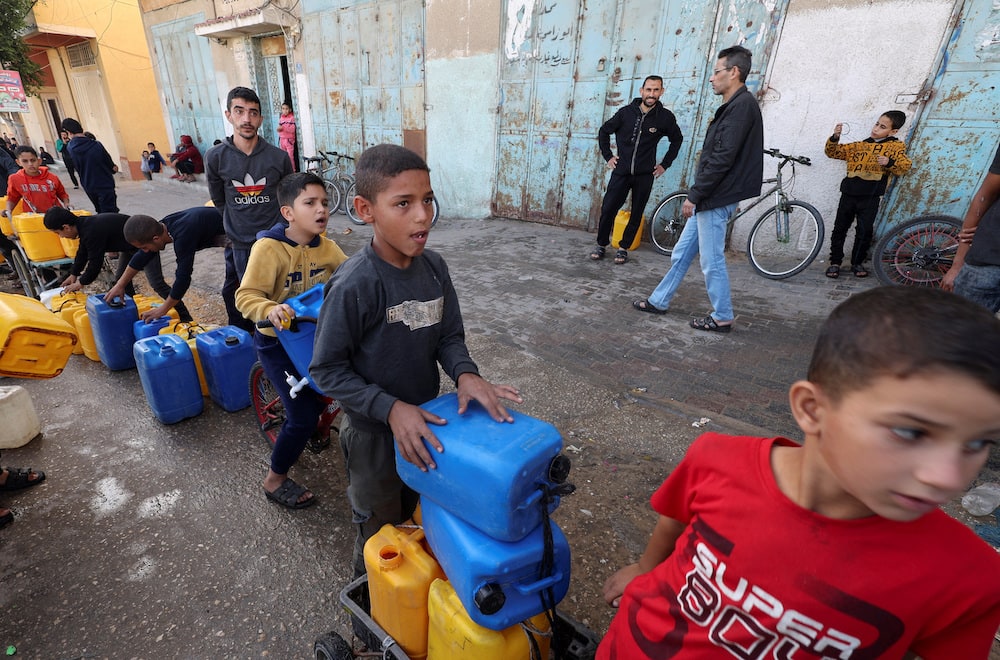
Palestinian children wait in a line with containers to collect water, amid drinking water shortages, in Rafah in the southern Gaza Strip, Nov. 23, 2023. REUTERS/Ibraheem Abu Mustafa
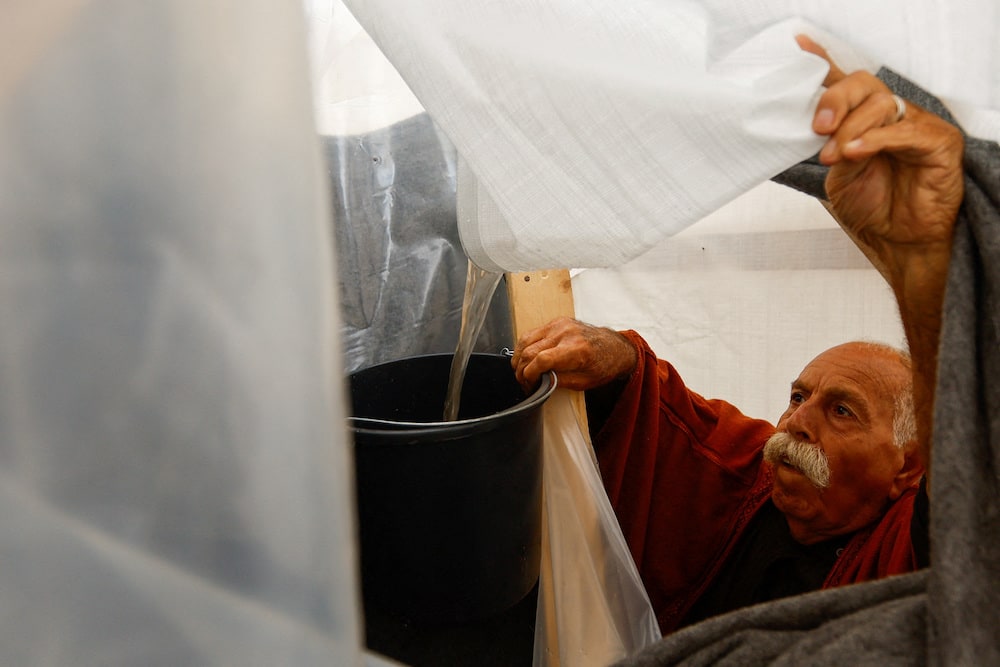
A displaced Palestinian sheltering in a tent camp collects rainwater, due to the lack of drinking water, as the conflict between Israel and Palestinian Islamist group Hamas continues, in Khan Younis in the southern Gaza Strip, Nov. 15, 2023. REUTERS/Ibraheem Abu Mustafa
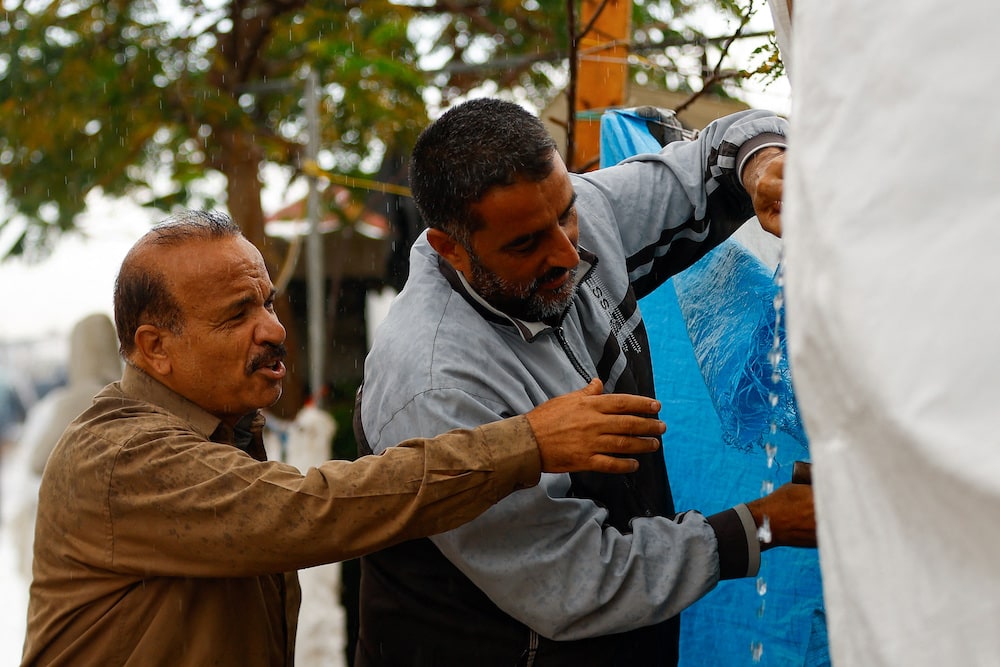
The start of the rainy season and the possibility of flooding increased fears that the densely populated enclave's sewage system will be overwhelmed and disease will spread.
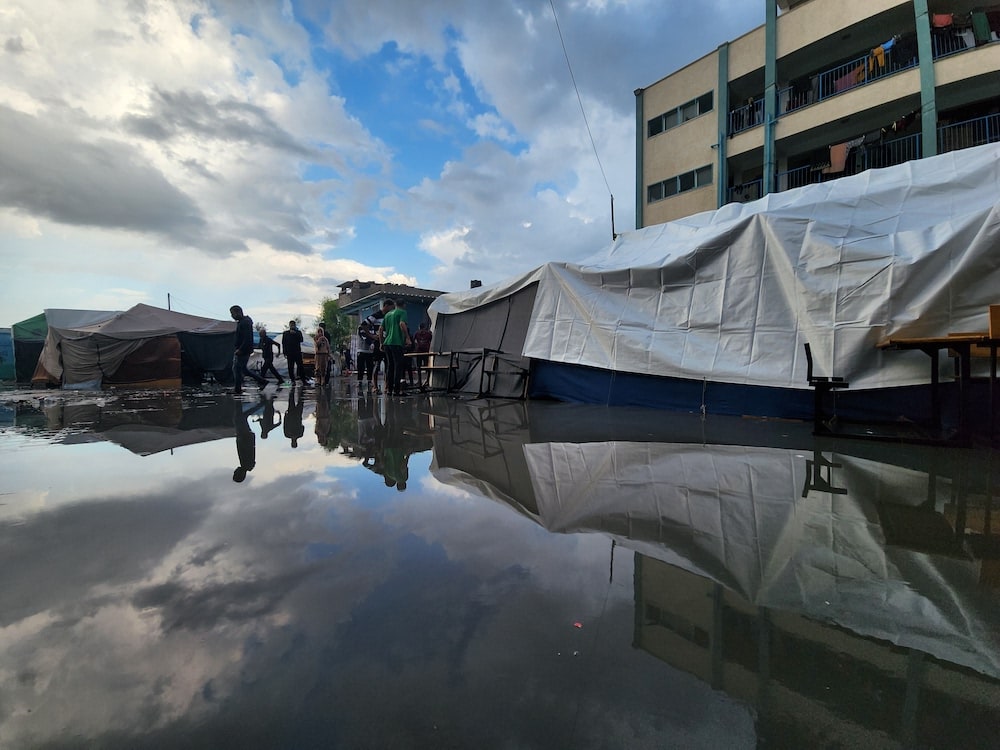
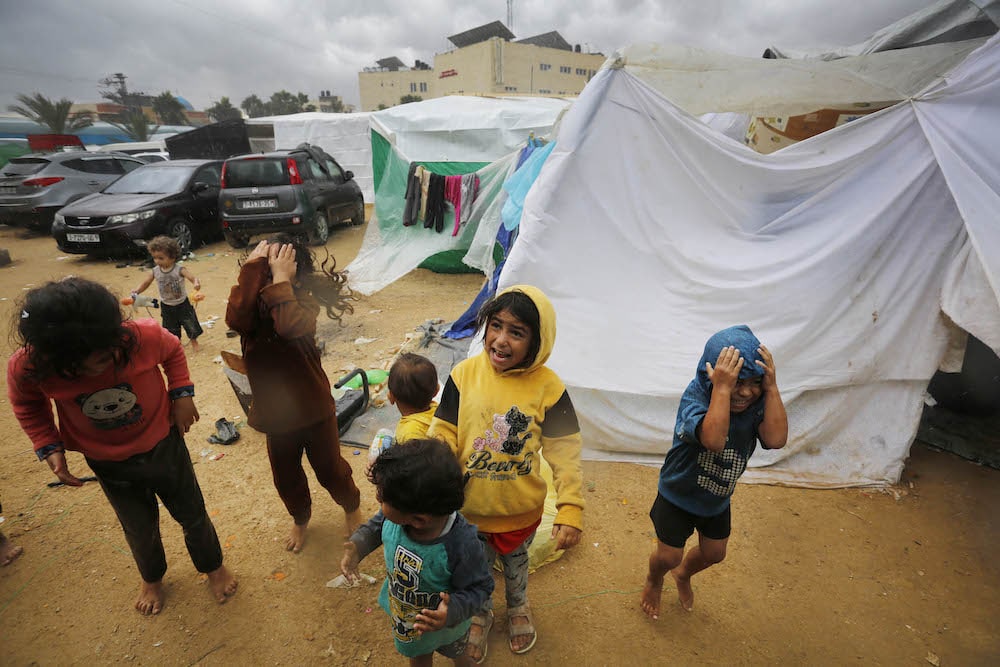
Palestinians taking shelter in a UNRWA school struggle with downpours, strong winds and flooding, Nov. 14, 2023. UNRWA/Ashram Amra
Displaced Palestinians work to fix a tent under the rain as people shelter in a tent camp, amid the conflict between Israel and Palestinian Islamist group Hamas, in Khan Younis in the southern Gaza Strip, Nov. 15, 2023. REUTERS/Ibraheem Abu Mustafa
Children standing in the rain at a shelter in Deir al-Balah, November 14, 2023. UNRWA/Ashram Amra
Around 20 tons of solid waste is generated each day, with few if any facilities to process it. The U.N. reported sewage flowing in the streets in several areas in Rafah, in southern Gaza.
The lack of fuel has disrupted the collection of solid waste, which the World Health Organization said created an “environment conducive to the rapid and widespread proliferation of insects, rodents that can carry and transmit diseases”.
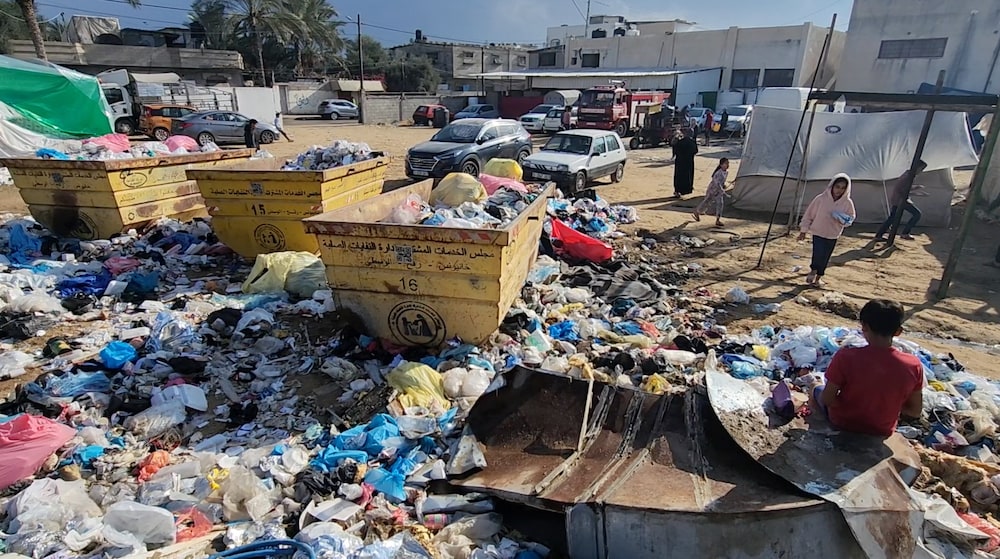
The accumulation of garbage near refugee tents, as depicted in this image taken in Deir El Balah, increases the risk of diseases. UNRWA/Ashram Amra
The United Nations human rights chief said that widespread outbreaks of disease and hunger seemed “inevitable” in Gaza after weeks of Israeli assault on the densely populated Palestinian enclave.
The World Health Organization has warned of “worrying trends” in disease spread in Gaza – where bombardments and a ground operation have disrupted the health system, access to clean water and caused people to crowd into shelters – saying there had been an unusually large number of cases of diarrhoea in the enclave. More than 33,551 cases have been reported since mid-October, the bulk of which among children under five years of age.
Read more: Mapping the conflict in Israel and Gaza.