Graphics
Mapping the conflict between Israel and Iran
Jerusalem
04:46 p.m.
Tehran
05:16 p.m.
Washington
09:46 a.m.
A map showing bases and facilities the U.S. military operates out of in the Middle East.
President Donald Trump said Thursday he would decide in the next two weeks whether the U.S. will get involved in the Israel-Iran air war.
Trump’s self-imposed deadline follows significant buildup of U.S. military equipment in the area and puts pressure on Iran and a European-led effort to de-escalate the ongoing conflict.
Should the U.S. become involved directly in airstrikes, numerous bases it operates from, dotted across the Middle East, might support attacks against Iran as well as become possible targets for retaliatory missile strikes.
The U.S. has already moved some aircraft and ships from bases that may be vulnerable to any potential Iranian attack, two U.S. officials told Reuters on Wednesday. The U.S. embassy in Qatar also issued an alert on Thursday temporarily restricting its personnel from accessing the Al Udeid Air Base, the largest U.S. military installation in the Middle East, which is located in the desert outside Doha.
Washington has also begun deploying more fighter aircraft — including F-16, F-22 and F-35 fighters — to the Middle East and extending the deployment of other warplanes, bolstering forces that can defend personnel and facilities by shooting down drones and other projectiles, U.S. officials said.
Other recent examples of the U.S. military buildup in the region include:
- A large number of tanker aircraft sent to Europe earlier this week
- The USS Nimitz aircraft carrier strike group, which was sent toward the Middle East, joining the USS Carl Vinson already stationed nearby
- B-52 bombers and fighter aircraft spotted via satellite imagery at the joint UK-U.S. military base, Diego Garcia, in the Chagos Islands
A globe showing U.S. forces moving into proximity of Iran, including tanker aircraft, fighter and bomber planes and U.S. aircraft carriers.
Why Israel may need the US to attack Iran to achieve its goals
Israel’s command of Iranian air space leaves few obstacles in the way of its expanding bombardment, but it will struggle to deal a knock-out blow to deeply buried nuclear sites without the U.S. joining the attack, experts say.
Chief among these is Iran’s Fordow nuclear facility, which according to the International Atomic Energy Agency, has thus far suffered little or no visible damage from Israel’s air campaign.
Dug into a mountain, Fordow produces the vast majority of Iran’s uranium enriched to up to 60%, which could be refined further to weapons-grade material.
The heart of the facility is buried up to 80-100 metres deep and is inaccessible to all but the most powerful U.S. bunker buster bombs.
Add a description of the graphic for screen readers. This is invisible on the page.
The Fuel Enrichment Plant at Natanz is buried even deeper than Fordow. However, the IAEA estimates that an earlier Israeli attack on the plant’s energy infrastructure has effectively destroyed the plant’s uranium enrichment centrifuges. But destroying the facility altogether is beyond the firepower Israel alone can deliver from the air.
If Trump decides to use U.S. forces against facilities like Fardow, he may opt to send the U.S. Air Force’s B-2 Spirit stealth bomber.
The bomber’s internal weapons bays are specifically designed to maintain stealth characteristics while accommodating large ordnance loads which could include two GBU-57A/B MOP (Massive Ordnance Penetrator), a 30,000-pound precision-guided “bunker buster” bomb.
The MOP represents the largest conventional bomb in the U.S. arsenal, specifically engineered to defeat hardened underground bunkers. Its massive size provides unmatched bunker-penetration capability, while the weapon’s 20.5-foot length and GPS-guided precision targeting system enable accurate strikes against specific underground facilities. Its penetration capability of over 60 metres (200 feet) through hardened concrete makes it effective against the world’s most protected underground installations.
In order to destroy the facility at Fardow, which may be buried as much as 100 metres underground, bombers may need to drop multiple MOPs in succession on the same target.
According to a 2012 Congressional Research Service report, reaching the facility directly may not be necessary to disrupt or destroy the centrifuges it contains:
“The question would be how well the centrifuges have been isolated from shock and the possible blast effects of an attack.”
But if the goal of any U.S. or Israeli campaign is to ultimately destroy these facilities, success is not guaranteed, even with such powerful bombs.
Andreas Krieg, a senior lecturer at the School of Security Studies at King’s College London, said even the heaviest U.S. bunker-busting bombs might struggle to penetrate Iran’s deepest sites — in the event President Donald Trump decides to join the attack — suggesting special, commando-style forces might be needed on the ground to completely destroy the facilities.
Map of Iran showing nuclear mining and fuel processing facilities, power reactors, nuclear research and development, and suspected weaponisation research facilities.
Israel’s military has said the current goal of its continuing campaign against Iran is the dismantling of Tehran’s nuclear and ballistic missile programmes.
Iran has been enriching uranium to up to 60% fissile purity, which could be refined further to the roughly 90% that is weapons-grade material.
The International Atomic Energy Agency (IAEA), which inspects Iran’s nuclear sites including its enrichment plants, says this is of “serious concern” because no other country has enriched to that level without producing nuclear weapons. Western powers say there is no civil justification for such high-level enrichment.
Tehran has long insisted its nuclear programme is for civilian purposes only and points to its right to nuclear technology for peaceful purposes, including enrichment, as a party to the nuclear Non-Proliferation Treaty.
Three of Iran’s main nuclear facilities have been hit or badly damaged in Israeli air attacks:
A satellite image shows the Arak nuclear facility before airstrike in Iran.
The Israeli military said it targeted the Khondab nuclear reactor in Arak overnight, including its partially-built heavy-water research reactor. Heavy-water reactors pose a nuclear proliferation risk because they can easily produce plutonium, which, like enriched uranium, can be used to make the core of an atom bomb.
Iranian media reported two projectiles hitting an area near the facility, which had been evacuated and there were no reports of radiation threats.
A satellite image shows the Natanz nuclear facility after airstrike in Iran.
The Fuel Enrichment Plant (FEP) at Natanz is a vast underground facility designed to house 50,000 centrifuges, the machines that enrich uranium.
There has long been speculation among military experts about whether Israeli airstrikes could destroy the FEP given that it is several floors underground.
There were about 17,000 centrifuges installed there at last count, of which around 13,500 were operating, refining uranium to up to 5%.
The electricity infrastructure at Natanz was destroyed by Israel, IAEA chief Rafael Grossi told the U.N. Security Council on Friday, specifically an electrical sub-station, the main electric power supply building, emergency power supply and back-up generators.
“With this sudden loss of external power, in great probability the centrifuges have been severely damaged if not destroyed altogether,” Grossi told the BBC on Monday.
The above-ground Pilot Fuel Enrichment Plant (PFEP) at Natanz is the smallest and softest target of Iran’s three enrichment plants and was destroyed in the Israeli attack, according to the IAEA. Long a research and development centre, it used fewer centrifuges than the other plants, often connected in smaller clusters of machines known as cascades. It did, however, have two interconnected, full-size cascades of up to 164 advanced centrifuges each, enriching uranium to up to 60%.
A satellite image shows the Isfahan enrichment facility.
Israeli strikes damaged four buildings at the nuclear complex at Isfahan, the IAEA has said, including the Uranium Conversion Facility (UCF) and facilities where work on uranium metal was conducted.
While it has other uses, mastering uranium metal technology is an important step in making the core of a nuclear weapon. If Iran were to try to make a nuclear weapon, it would need to take weapons-grade uranium and turn it into uranium metal.
Uranium conversion is the process by which “yellowcake” uranium is turned into uranium hexafluoride, the feedstock for centrifuges, so that it can be enriched. If the UCF is out of use, Iran will eventually run out of uranium to enrich unless it finds an outside source of uranium hexafluoride.
Iran’s underground enrichment plant at Fordow
Iran’s most deeply buried enrichment installation at Fordow, dug deep into a mountain, has suffered little or no visible damage, the IAEA reiterated on Monday.
While Fordow has only about 2,000 centrifuges in operation, it produces the vast majority of Iran’s uranium enriched to up to 60%, using roughly the same number of centrifuges as Natanz, because it feeds uranium refined to up to 20% into those cascades, compared to 5% at Natanz.
Fordow produced 166.6 kg of uranium enriched to up to 60% in the most recent quarter. According to an IAEA yardstick, that is enough in principle, if enriched further, for just under four nuclear bombs, compared to the PFEP’s 19.2 kg, less than half a bomb’s worth.
In 2018, Israel obtained secret files from Iran’s nuclear archive revealing previously hidden details about the key underground facility.
Graphic that shows the details of the Fordow enrichment plant in Iran, a key underground facility.
In addition to attacks on nuclear facilities, at least 14 Iranian nuclear scientists have been killed in Israeli attacks since Friday, including in car bombings, two sources in the Gulf said on Sunday.
Israel’s armed forces named nine of them on Saturday, saying they “played a central part of the progress toward nuclear weapons” and that “their elimination represents a significant blow to the Iranian regime’s ability to acquire weapons of mass destruction”. That assertion could not immediately be verified.
Western powers have often said Iran’s nuclear advances provide it with an “irreversible knowledge gain”, suggesting that while losing experts or facilities may slow progress, the advances are permanent.
Since Israel’s surprise attack against Iranian nuclear facilities and ballistic missile sites, Iran has retaliated with hundreds of missiles and drones launched against major cities across Israel.
Dozens of people in Israel have been killed so far in the Iranian missile attacks.
Iran’s ballistic and cruise missiles.
As part of its campaign, Israel has also conducted extensive aerial bombardments against Iranian missile launchers, silos and support units.
According to analysis from the Institute for the Study of War (ISW) and AEI Critical Threats Project, Israel has “likely destroyed around a third of the Iranian missile launchers.” Iran’s early waves of retaliatory strikes have also depleted its stock of missiles that can reach Israel. ISW estimates it has used up at least a third and as much as half of its long-range missiles.
Map showing the locations of Iran’s missile facilities and Israeli strikes from June 12 to 16.
Iran’s ability to retaliate with weapons fired by its regional proxies has also been sharply degraded over the past year, with the downfall of its ally Bashar al-Assad in Syria and the decimation of Hezbollah in Lebanon and Hamas in Gaza.
Still, some Iranian missiles are penetrating Israel’s extensive missile defence systems and striking Israeli cities.
Iran’s Revolutionary Guards said the latest attack employed a new method that caused Israel’s multi-layered defence systems to target each other and allowed Tehran to successfully hit many targets, without providing further details.
The Israeli Defence Force did not immediately respond to a request for comment on the strikes.
Israel has been honing its air defences since coming under Iraqi Scud salvoes in the 1991 Gulf War, in addition to receiving support from the U.S., which has provided its ally with advanced anti-missile equipment.
An Israeli military official said on Saturday that the defensive umbrella had an “80 or 90% success rate” but emphasised that no system is 100% perfect, meaning that some Iranian missiles were breaking through the shield.
A graphic shows four types of interceptor missile systems Israel uses and the ranges within which they operate.
The short-range Iron Dome air defence system was built to intercept the kind of rockets fired by Palestinian Islamist movement Hamas in Gaza.
Developed by Rafael Advanced Defense Systems with U.S. backing, it became operational in 2011. Each truck-towed unit fires radar-guided missiles to blow up short-range threats such as rockets, mortars and drones in mid-air.
A naval version of the Iron Dome, to protect ships and sea-based assets, was deployed in 2017.
The system determines whether a rocket is on course to hit a populated area. If not, the rocket is ignored and allowed to land harmlessly.
Iron Dome was originally billed as providing city coverage against rockets with ranges of between 4 km and 70 km (2.5-43 miles), but experts say this has since been expanded.
A graphic shows a city being protected from attack by Iron Dome. Iron Dome is a mobile system designed to intercept short-range rockets and artillery shells that endanger populated areas in Israel. Each battery – a combination of missile launcher, control station and radar – can defend about 150 square kilometres (58 square miles), about the size of a medium-sized city.
Map displaying airstrikes exchanged between Israel and Iran.
Israel and Iran’s long-simmering tensions erupted into missile attacks last Friday, when Israel launched a suprise attack against military and nuclear targets in Iran and wiped out the top echelon of Iran’s military command. Iran retaliated with waves of ballistic missiles.
Days on, the conflict appears set to continue with daily missile attacks and aerial bombardments on both Israel and Iran.
Senior Iranian army commander Kioumars Heydari said attacks against Israel will intensify with a new wave of hundreds of drones, state media reported. It also reported Iran’s Revolutionary Guards said a ‘more powerful’ new wave of missiles was recently launched towards Israel.
Israel has warned its campaign will escalate in the coming days and promised reprisals for civilian casualties following Iranian missile strikes.
“If (Supreme Leader Ayatollah Ali) Khamenei continues to fire missiles at the Israeli home front, Tehran will burn,” Israeli Defence Minister Israel Katz said.
Israel’s bombardment of Tehran
Map of Tehran showing locations of Israeli airstrike locations around strategic sites.
Israel Defense Forces (IDF) have bombed sites across Iran and said its targets included nuclear facilities, ballistic missile factories and military commanders as part of an operation it said was aimed to prevent Tehran from building an atomic bomb. Iran says its nuclear programme is only for peaceful purposes.
Missile and air attacks have been especially concentrated in the capitol, Tehran. On Monday, Israel’s military claimed to have control of Iranian air space following successful strikes against Iranian air defence systems and in a post on X ordered residents of a large section of Tehran to leave ahead of more attacks.
U.S. president Donald Trump also called for large scale evacuations in a post on Truth Social: “Everyone should immediately evacuate Tehran!”
Iran says more than 224 Iranians have been killed in the attacks since last Friday, most of them civilians.
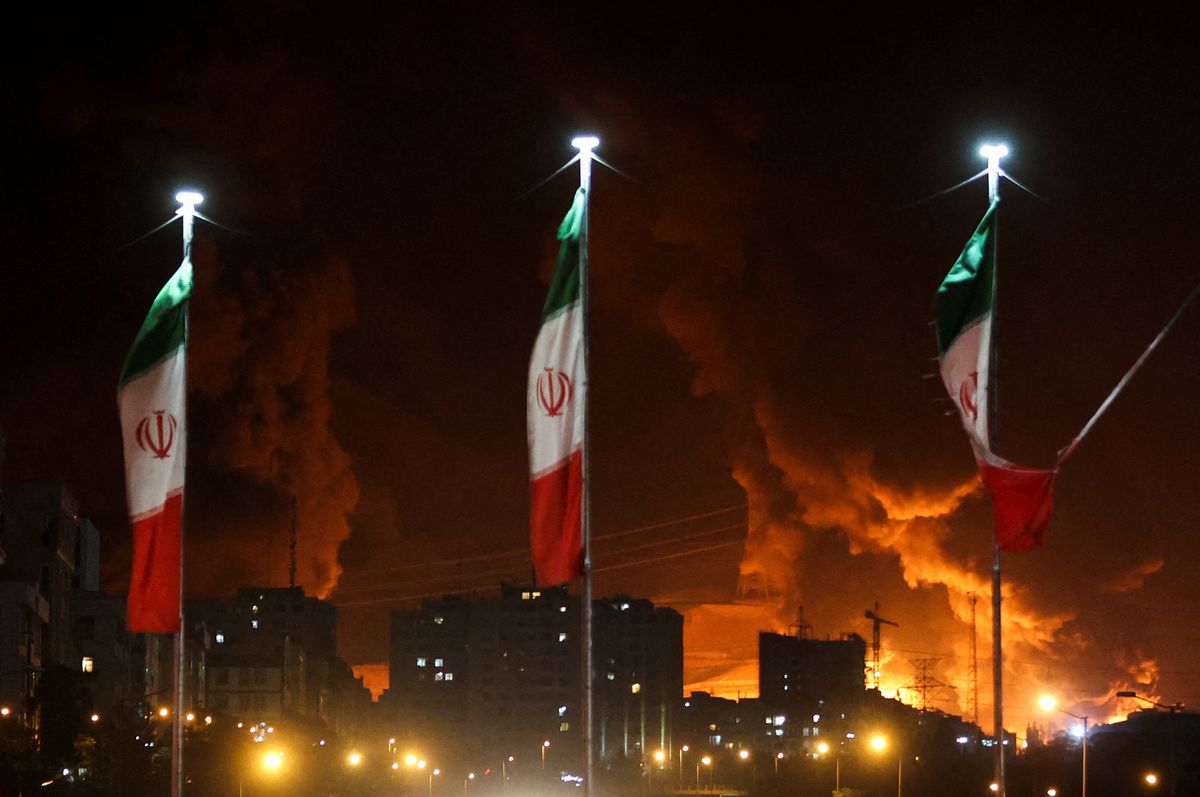
Iranian flags fly as fire and smoke from an Israeli attack on Sharan Oil depot rise, following Israeli strikes on Iran, in Tehran, Iran, June 15, 2025. Majid Asgaripour/WANA (West Asia News Agency) via REUTERS
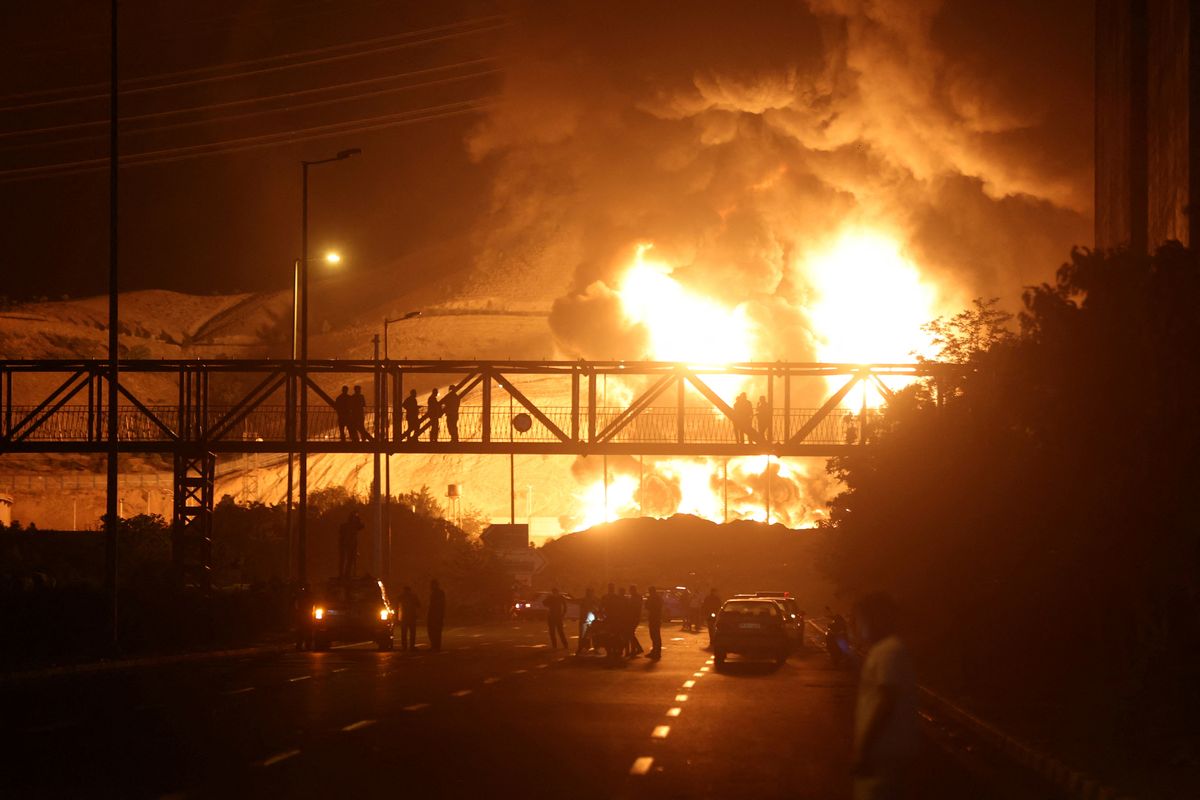
People watch from a bridge as flames from an Israeli attack rise from Sharan Oil depot, following Israeli strikes on Iran, in Tehran, Iran, June 15, 2025. Majid Asgaripour/WANA (West Asia News Agency) via REUTERS
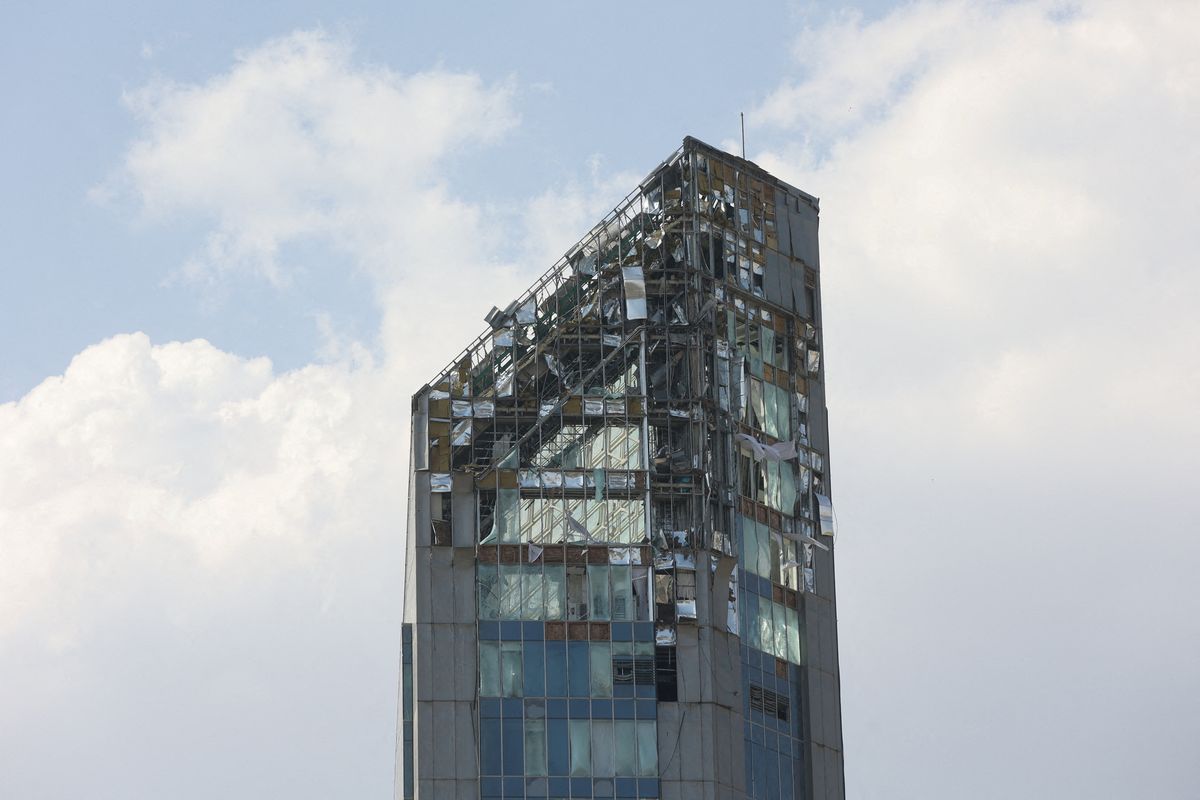
A high-rise building stands damaged in the aftermath of Israeli strikes, in Tehran, Iran, June 13, 2025. Majid Asgaripour/WANA (West Asia News Agency) via REUTERS
Iran’s retaliation against Israel
Map showing locations of Iranian airstrike in Tel-Aviv.
Iran has retaliated with waves of long-range and ballistic missile and drone attacks against cities across Israel.
While Israeli missile defences have intercepted many missiles and drones before reaching their intended targets, some missiles have penetrated the layered network of defences. Iran’s Revolutionary Guard has claimed to employ a new method that caused Israel’s defence systems to target each other and allowed Tehran to successfully hit many targets, without providing further details.
Dozens of apartment blocks and other buildings in central and northern Israel have been wrecked by the waves of missiles since Friday.
The severity and depth of the damage have outstripped anything that either Hamas militants in the Gaza Strip or Hezbollah fighters in neighbouring Lebanon have managed to inflict on Israel in decades of confrontation.
Israel says 24 people have been killed, all of them civilians.
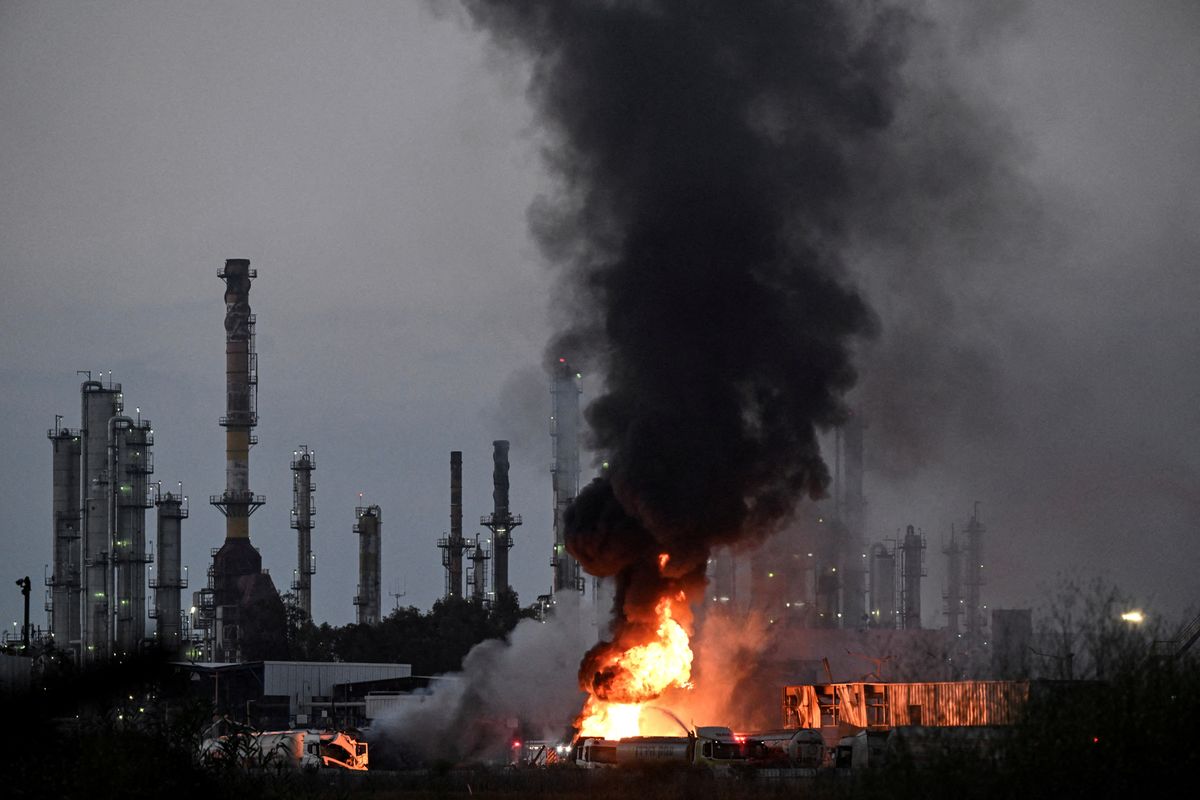
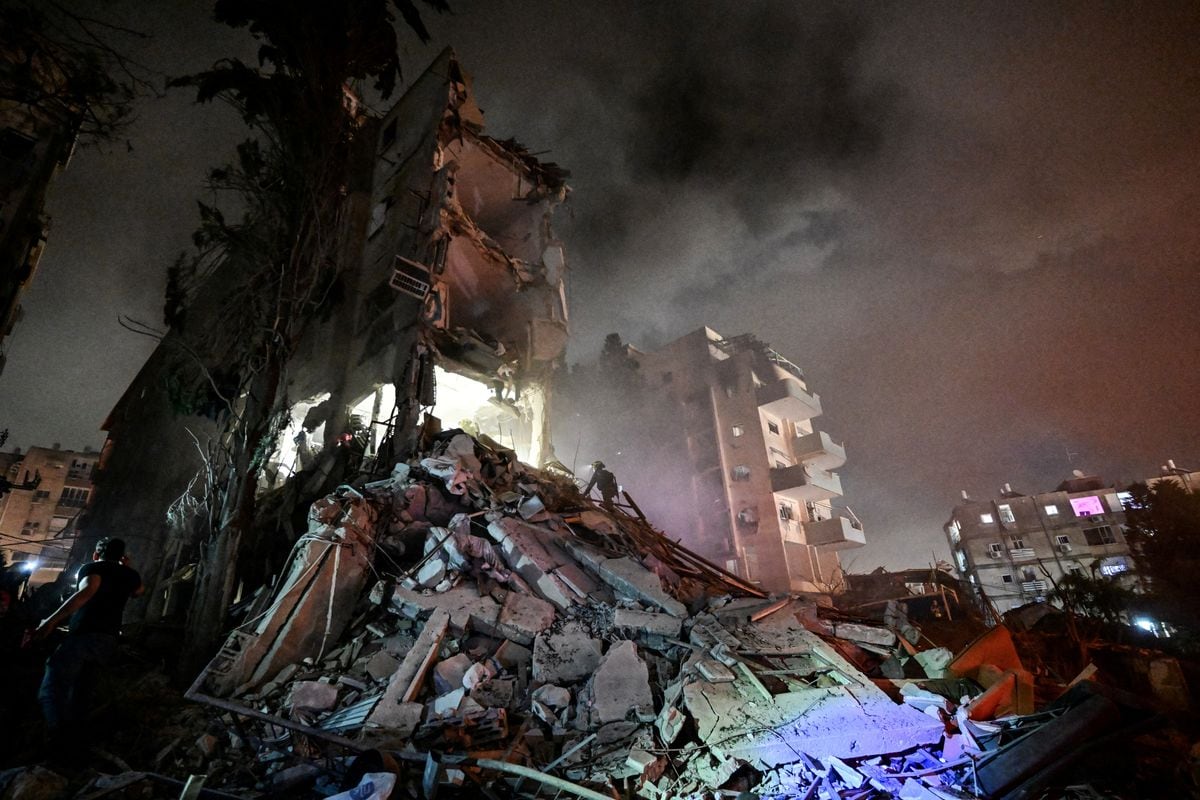
Smoke and fire rise at an impacted facility site following missile attack from Iran on Israel, at Haifa, Israel. REUTERS/Rami Shlush
Rescue personnel work at a residential building following missile attack from Iran on Israel, at central Israel. REUTERS/Yossi Zeliger
Sources
OpenStreetMap; Natural Earth; Institute for the Study of War
Edited by
Jon McClure